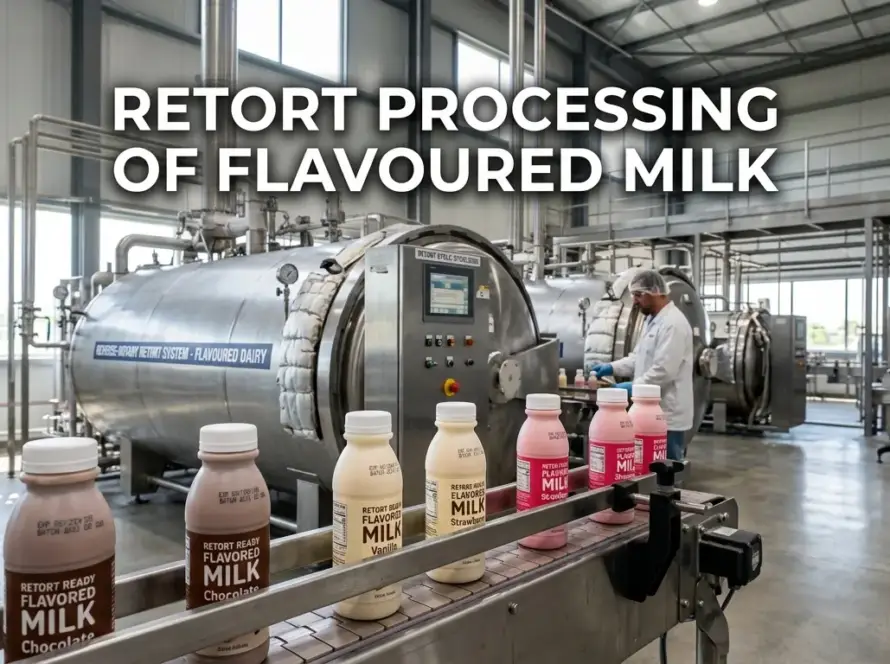
The Mission: Bridging India and Senegal Through Thermal Processing
To execute Export RTE Retort Food Processing for an international market, the objective was clear but technically demanding: engineer, produce, and ship a trial order of five authentic, ready-to-eat (RTE) West African meals to a client in Dakar, Senegal. Manufactured in India using advanced retort packaging, the product lineup included complex regional staples—Poulet Yassa, Poulet Mafé, Thiéboudienne, Poisson Yassa, and Crevettes Curry Coco—each formulated with rice in a single, shelf-stable pouch. As a BPCS-certified consultant and exporter, my mandate was to translate these traditional Senegalese recipes into commercially sterile, export-grade products without stripping them of their cultural identity or culinary integrity.
The Challenge: Timelines, Taste Profiles, and Red Tape
Executing this cross-border contract manufacturing project presented a gauntlet of technical and logistical hurdles. The trial shipment operated on an aggressive timeline, leaving zero margin for error during the formulation and thermal validation phases. Matching the exact West African flavor profile—from the acidic mustard-lemon base of a Yassa to the dense, high-lipid peanut sauce of a Mafé—within an Indian manufacturing facility required meticulous ingredient mapping and process control.
Beyond the culinary adjustments, we faced two critical bottlenecks. Technically, the inclusion of rice in every pouch fundamentally altered the heat penetration dynamics, threatening to turn the proteins to mush or leave cold spots in the dense starches. Logistically, an eleventh-hour regulatory roadblock emerged: the mandatory requirement for an FSSAI Central License registered specifically as a merchant exporter. Navigating the complex thermal degradation curves of rice and protein, while simultaneously solving a major compliance hurdle through my contract manufacturing partner, became the defining success of this export run.
The Formulation Challenge: Mastering the Senegalese Palate
Flavor Profiling in an Indian Contract Manufacturing Facility – Export RTE Retort Food Processing
Translating the vibrant, complex flavors of West Africa within an Indian contract manufacturing facility requires more than just following a recipe; it requires food science. Thermal processing fundamentally alters flavor profiles—blunting volatile aromatics while intensifying acidity and bitterness. Our first major hurdle was ingredient mapping and replication to ensure the final RTE product resonated authentically with the Dakar market.
For the Poulet Mafé, the challenge was the peanut base. Senegalese peanuts have a distinct fat profile and deep roasted flavor. Using standard Indian commercial peanut paste risked oil separation and emulsion breakdown under high retort temperatures (121°C / 250°F). We had to carefully engineer the lipid ratio and incorporate natural stabilizers to ensure the rich, creamy texture survived the sterilization cycle without breaking.
Similarly, the Yassa base—defined by its sharp, caramelized onion, mustard, and lemon profile—presented a severe pH challenge. In retort processing, high acidity can degrade muscle fibers, turning chicken or fish mushy during the F0 lethality cycle. We had to precisely buffer the marinades, achieving a target pH that preserved the traditional Senegalese tang while protecting the structural integrity of the proteins during the extended thermal hold times.
The Rice Conundrum: Heat Penetration and Starch Gelatinization
Culinary matching was only half the battle; the true engineering test was the inclusion of rice directly into the pouches alongside the meats and sauces. As any BPCS-certified professional knows, rice is one of the most volatile variables in retort processing.
When you process a liquid sauce, heat transfers rapidly via convection currents. However, the moment you introduce raw or parboiled rice into the pouch, the dynamics change entirely. During the thermal cycle, rice starches undergo gelatinization. As the starch granules absorb free water and swell, the viscosity of the pouch contents drastically increases. Within minutes, the convective heating currents stop completely, and the heat transfer mechanism shifts purely to conduction—a much slower process.
This shift is a thermal processing nightmare if not precisely calculated. To achieve the required F0 value (commercial sterility) at the pouch’s “cold spot,” the heat must slowly conduct through the dense, gelatinized rice block. If the process is prolonged to ensure the center is safe, the outer layers of the rice and the delicate proteins (like fish and shrimp) risk severe overcooking, resulting in an unpalatable, mushy texture.
To solve this, we had to manipulate several critical factors:
- Hydration Ratios: Strictly controlling the free-water-to-rice ratio to manage the final viscosity.
- Fill Weights & Solid-to-Liquid Ratios: Ensuring every pouch had the exact same proportion of sauce to rice to maintain a consistent heating curve.
- Initial Temperature (IT): Maintaining a high initial fill temperature to reduce the overall time required in the retort to hit the lethality target, thereby saving the texture of the meats.
By treating the rice not just as an ingredient, but as a critical thermodynamic variable, we successfully engineered a process that delivered safe, commercially sterile meals with distinct, individual grains of rice and perfectly tender proteins.
3. Product Showcase: The Trial Shipment SKUs – Export RTE Retort Food Processing
Engineering this trial shipment meant treating every recipe as an isolated thermodynamic problem. Here is a breakdown of the specific thermal processing challenges we overcame for each SKU to ensure commercial sterility without compromising the culinary integrity of the West African recipes.
Poulet Yassa + Riz (Ready-to-Eat Chicken Yassa with Rice) – Export RTE Retort Food Processing
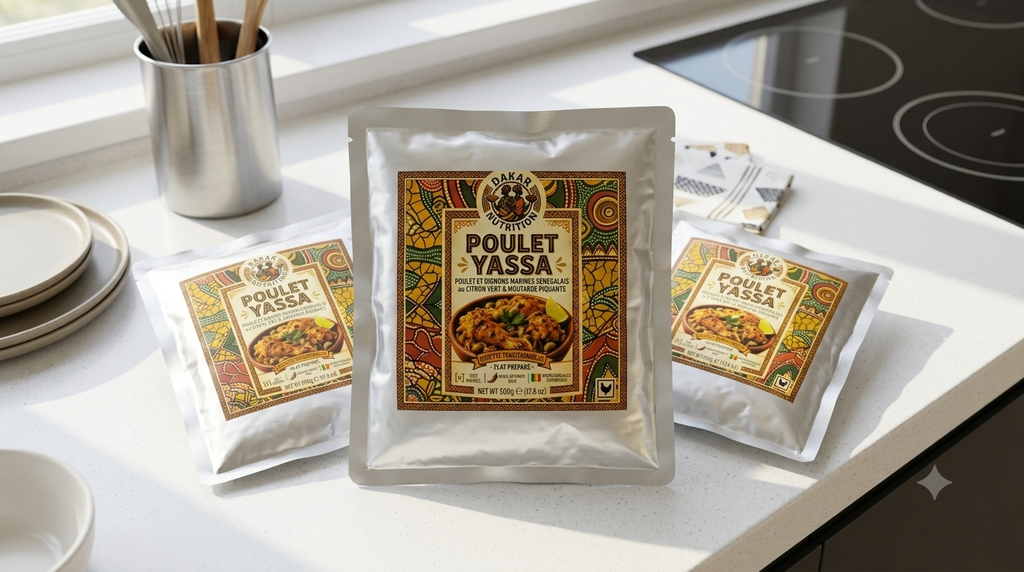
The hallmark of a traditional Yassa is its sharp, acidic marinade of lemon juice and mustard, paired with deeply caramelized onions. From a thermal processing standpoint, high-acid environments (low pH) combined with the extreme heat of a retort cycle (typically 121°C) can aggressively denature chicken muscle fibers, causing the meat to disintegrate into a mushy texture. The challenge was balancing the formulation’s titratable acidity to hit the flavor profile while calculating a thermal lethality (F0) curve that safely sterilized the dense rice component without over-processing the acid-softened chicken. By optimizing the come-up time (CUT) and utilizing a customized temperature hold, we preserved the bite of the chicken alongside perfectly gelatinized rice.
Poulet Mafé + Riz (Ready-to-Eat Chicken Mafé with Rice) – Export RTE Retort Food Processing
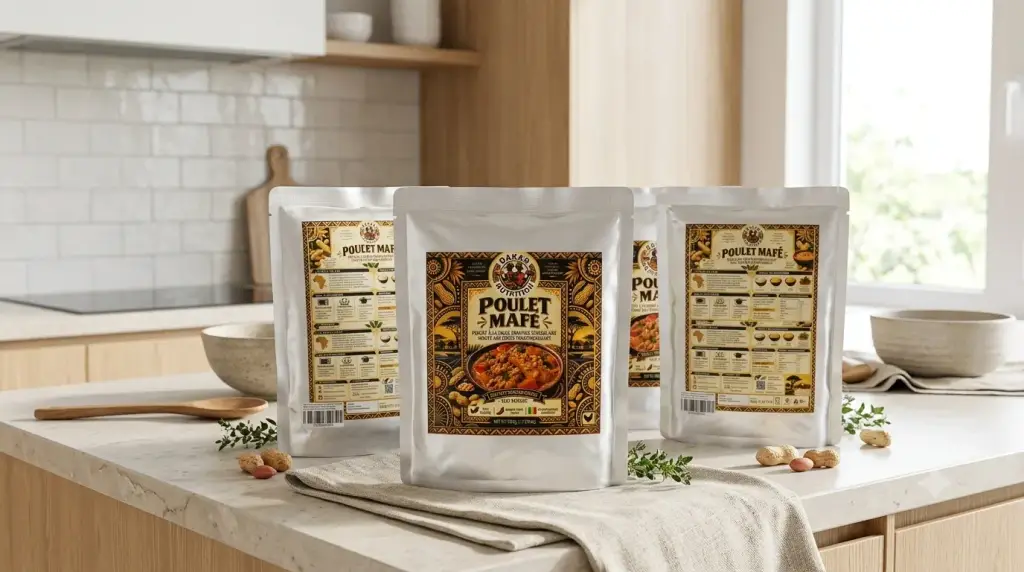
Mafé is characterized by its rich, heavy peanut paste base. In retort processing, high-fat content acts as a powerful thermal insulator. The dense lipid layer of the peanut sauce drastically reduced the heat transfer coefficient, forcing the entire pouch to heat via slow conduction rather than faster convection. Furthermore, there was a high risk of the peanut oil separating and breaking the emulsion under high pressure. To solve this, we employed natural homogenizing stabilizers and extended the thermal process time at a slightly lower retort temperature to ensure the heat adequately reached the cold spot of the rice without scorching or splitting the delicate peanut sauce.
Thiéboudienne (Ready-to-Eat Fish and Rice Meal) – Export RTE Retort Food Processing

As the national dish of Senegal, Thiéboudienne demands respect. Processing fish and broken rice together in a single pouch is exceptionally difficult. Fish protein is extremely heat-sensitive and prone to cellular blowout under retort overpressure, while the dense, starch-heavy broken rice requires significant heat to achieve sterility. The risk was that by the time the center of the rice reached the target F0, the fish would be reduced to an unpalatable paste. We mitigated this by carefully controlling the initial temperature (IT) of the fill and adjusting the solid-to-liquid ratio, allowing the rice to hydrate precisely without drawing all the moisture away from the fish, ensuring both components retained their distinct textures.
Poisson Yassa + Riz (Ready-to-Eat Fish Yassa with Rice) – Export RTE Retort Food Processing
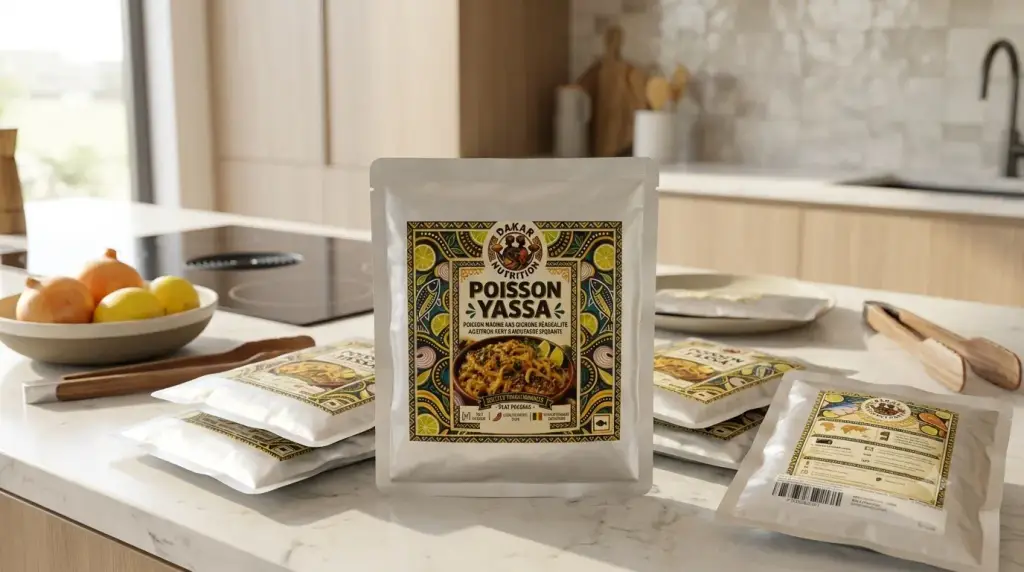
Combining the acidic, lemon-mustard onion base of the Yassa with the delicate flesh of fish presented a compounding challenge. Unlike chicken, fish degrades much faster in low-pH marinades, especially when subjected to the prolonged conduction heating curve caused by the accompanying rice. We had to carefully buffer the sauce’s acidity and utilize a rigid retort pouch structure (PET/AL/CPP) with highly controlled overpressure during the cooling phase. This prevented the pouch from expanding and crushing the tenderized fish fillets as the internal steam condensed.
Crevettes Curry Coco + Riz (Ready-to-Eat Shrimp Coconut Curry with Rice) – Export RTE Retort Food Processing
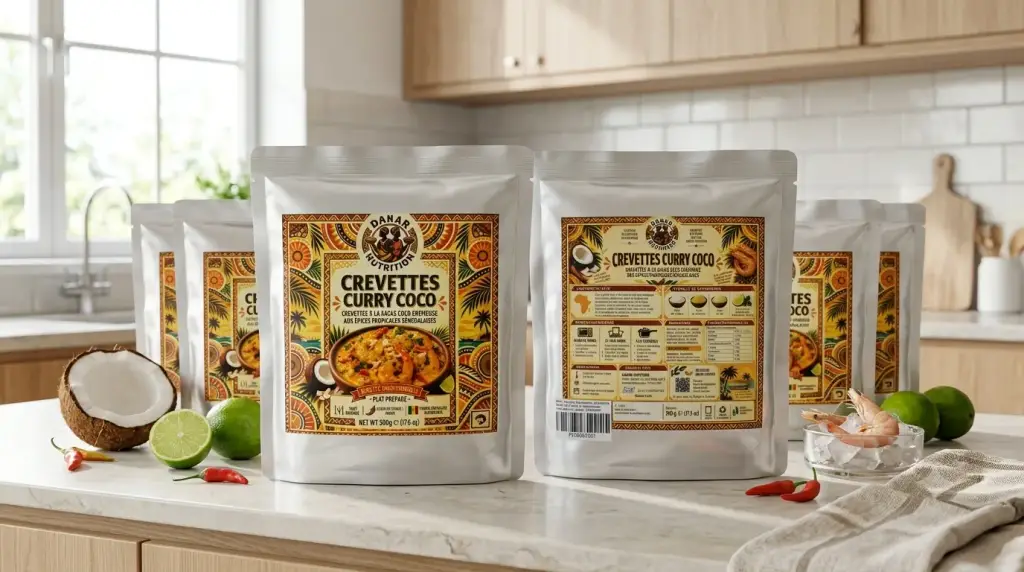
Shrimp and coconut milk are notoriously unstable under thermal stress. The high heat of the retort process naturally causes coconut milk to curdle as its proteins denature and separate from the water and fat. Simultaneously, shrimp is highly susceptible to shrinking, toughening, and turning rubbery if the F0 target overshoots even slightly. We engineered a specific hydrocolloid blend to stabilize the coconut emulsion during the heating phase and implemented a rapid-cooling protocol using chilled water in the retort immediately after the lethality target was reached. This abrupt temperature drop halted the cooking process instantly, locking in the plump texture of the shrimp and maintaining a silky, unified curry sauce.
4. Technical Deep Dive: Heat Penetration & Formulation Engineering
Achieving commercial sterility while maintaining culinary quality in a single-pouch mixed meal requires strict adherence to Better Process Control School (BPCS) principles. Managing the thermodynamic properties of these West African dishes meant controlling every variable before the pouches ever entered the retort.
Viscosity Control and Emulsion Stability using E-1422 – Export RTE Retort Food Processing
One of the trade secrets to surviving the extreme conditions of a retort cycle (121°C / 250°F under pressure) is managing sauce viscosity and preventing emulsion breakdown. For this trial shipment, I utilized E-1422 (Acetylated Distarch Adipate) as our primary modified starch.
Unlike native starches that gelatinize, rupture, and lose their thickening power under high heat and acidic conditions, E-1422 is highly cross-linked. It provided exceptional stability across our most challenging SKUs:
- In the Yassa (High Acid): It maintained the sauce’s viscosity without degrading under the low pH of the lemon-mustard marinade.
- In the Mafé (High Lipid): It acted as a binder, trapping the free peanut oil and preventing unsightly fat separation.
- In the Coconut Curry (Thermal Shock): It prevented the coconut milk proteins from curdling and weeping (syneresis) during the severe heating and cooling phases.
By keeping the sauce viscosity stable, E-1422 ensured that our heat penetration curves remained predictable and consistent from pouch to pouch.
Heat Penetration & F0 Target Calculations – Export RTE Retort Food Processing
Because we were processing thick sauces and gelatinizing rice simultaneously, the heat transfer mechanism shifted rapidly from convection to conduction. We relied on rigorous heat penetration testing using wireless data loggers inserted directly into the “cold spot” of the pouches.
To ensure safety without overcooking the delicate proteins, we mapped the critical parameters outlined below:
Table 1: Thermal Processing Parameters & Heating Models
| SKU / Product | Primary Heating Model | F0 Target Base | Formulative Hurdle Overcome |
| Poulet Yassa + Riz | Mixed (Convection to Conduction) | Meat / Acidic | Buffering pH; using E-1422 for acid-heat stability |
| Poulet Mafé + Riz | Conduction (Dense paste) | Meat / Low Acid | Penetrating thermal insulation of peanut lipids |
| Thiéboudienne | Conduction (Starch heavy) | Fish / Low Acid | Balancing IT (Initial Temp) to prevent fish blowout |
| Crevettes Curry Coco | Conduction | Seafood / Low Acid | Stabilizing coconut emulsion under overpressure |
Critical Factors Management & Packaging Integrity
A safe scheduled process relies on controlling critical factors. On the production floor, we strictly monitored fill weights and the solid-to-liquid ratio. A pouch with 5 grams too much rice would alter the conduction curve, potentially leading to under-processing. We maintained a high Initial Temperature (IT) to shorten the overall retort come-up time (CUT), saving the meats from excessive thermal degradation.
Finally, packaging selection was non-negotiable. We utilized a standard high-barrier retort pouch structure—PET / AL / CPP (Polyethylene Terephthalate / Aluminum Foil / Cast Polypropylene). The CPP inner layer provides the robust heat seal necessary to withstand the internal steam expansion, while the overpressure in the retort was meticulously controlled during the cooling phase to prevent pouch bursting and preserve the structural integrity of the food inside.
📥 Download the Master B2B Technical Specification Data Sheet
Access the complete industrial formulation percentages, thermal processing parameters ($F_0$ lethality targets), starch hydration ratios, and FSSAI merchant export compliance checklist for all 5 RTE West African SKUs.
- Full Thermal Lethality Matrix ($F_0$ Values): Calibrated for Chicken, Fish, Shrimp, and Rice.
- E-1422 Starch Guidelines: Exact usage rates for acid buffering and lipid emulsion stability.
- Packaging & QC Specs: Layer structures, burst test thresholds, and incubation parameters.
- FSSAI Export Flowchart: Step-by-step merchant exporter registration guide.
5. The Regulatory Hurdle: Navigating the FSSAI Central License
With the technical formulations locked in and the thermal processing curves validated, we hit a severe administrative roadblock just weeks before the targeted shipment date. In India, the regulatory framework governing the export of food products is uncompromising.
The Merchant Exporter Mandate
Many food entrepreneurs assume that if they use a fully compliant, licensed contract manufacturing facility, they are covered under the manufacturer’s umbrella. This is a critical misconception. Under the Food Safety and Standards Authority of India (FSSAI) regulations, all importers and exporters of food products must hold an FSSAI Central License, regardless of their annual turnover or whether they own the manufacturing facility.
As the merchant exporter coordinating this trial shipment to Senegal, I was required by law to have my own Central License. Without it, the Directorate General of Foreign Trade (DGFT) and Indian Customs would not clear the RTE pouches for export, rendering our entire production run useless.
The Contract Manufacturing Solution
Applying for an FSSAI Central License typically requires an extensive dossier of technical documentation, including facility layout blueprints, water analysis reports, machinery lists, and a comprehensive Food Safety Management System (FSMS) plan. For a merchant exporter operating without their own physical factory, generating these documents from scratch is impossible.
This is where the strategic value of an established contract manufacturing partnership proved invaluable. Because my contract manufacturer already held a robust FSSAI Central License and operated a world-class, export-oriented unit, I was able to apply for my license under the specific “Merchant Exporter / Relabeller” category.
To expedite my Central License approval, we leveraged the manufacturer’s existing compliance infrastructure. They provided the mandatory Manufacturer’s NOC (No Objection Certificate), allowing me to legally tie my export entity to their production facility. We mapped my BPCS-validated thermal processing logs directly into their existing FSMS plan. By proving to the FSSAI authorities that the products were manufactured, thermally processed, and packaged in a facility that already met stringent Central Licensing standards, we successfully secured my export license just in time.
This eleventh-hour hurdle underscores a vital lesson for anyone looking to commercialize and export regional cuisines: mastering the culinary and thermal science is only half the job. You must architect your supply chain and regulatory compliance with the exact same level of precision.
Frequently Asked Questions (FAQ)
How does adding rice affect the retort thermal process? Rice starches gelatinize during heating, absorbing free water and drastically increasing the product’s viscosity inside the pouch. This physical change shifts the primary heat transfer mechanism from rapid convection (heating of liquids) to slow conduction (heating of dense solids). To achieve commercial sterility (the F0 target) at the pouch’s cold spot, the overall processing time must be extended, requiring precise formulation to prevent delicate proteins from overcooking.
Why do merchant exporters need an FSSAI Central License if they use a contract manufacturer? Under Indian food safety regulations, the act of exporting food is treated as a distinct, heavily regulated business activity separate from manufacturing. The FSSAI mandates that all exporters, regardless of their turnover or whether they own the production facility, hold a Central License to maintain accountability in the global supply chain. Merchant exporters fulfill this by securing a No Objection Certificate (NOC) and linking their export entity to their contract manufacturer’s already-licensed facility.
How do retort pouches keep meat and seafood safe without refrigeration? Retort pouches utilize a high-barrier, multi-layer structure (typically PET/AL/CPP) combined with advanced thermal sterilization. Once the pouch is sealed, it is processed in a retort machine under high pressure and steam at 121°C (250°F). This calculated heat lethality destroys all spoilage microorganisms and harmful pathogens, such as Clostridium botulinum. The aluminum barrier prevents oxygen and light penetration, rendering the food commercially sterile and shelf-stable for up to 24 months.
What is the role of a BPCS-certified consultant in contract manufacturing? A Better Process Control School (BPCS) certified consultant ensures that low-acid and acidified foods meet rigorous international thermal processing standards (including FDA guidelines). During contract manufacturing, they design the safe scheduled process by validating heat penetration data, calculating precise F0 lethality values, and controlling critical factors like initial temperature (IT), solid-to-liquid ratios, pH buffering, and pouch seal integrity to prevent food safety failures.
8. Conclusion: The Blueprint for Scaling Regional Cuisines Globally
Commercializing heritage recipes for global export is a multidisciplinary engineering challenge. Translating Senegal’s national dishes—from the high-acid profile of Yassa to the lipid-dense emulsion of Mafé—into shelf-stable, single-pouch RTE meals required uniting thermodynamic modeling, hydrocolloid chemistry ($E-1422$), and regulatory compliance.
The trial shipment to Dakar proves that with rigorous thermal validation, precise hydration control, and proactive FSSAI merchant export licensing, regional food brands and merchant exporters can successfully bridge domestic manufacturing capacity with international retail demand—without compromising culinary authenticity or commercial sterility.
About the Author & Technical Advisory
Karthikeyan is a Better Process Control School (BPCS) certified consultant specializing in thermal processing, contract manufacturing setup, and regulatory clearance for low-acid and acidified shelf-stable foods. He assists FMCG brands, exporters, and R&D teams in scaling complex formulations into commercially sterile retort formats compliant with FDA, FSSAI, and international food safety standards.
Work With Us on Your Next Retort Project
Whether you are looking to scale a complex multi-component meal, optimize $F_0$ lethality cycles, eliminate sauce separation, or navigate merchant export licensing in India:
- Thermal Process Validation: Wireless heat penetration testing, cold-spot determination, and scheduled process calculations.
- Formulation Engineering: Viscosity stabilization, acid buffering, and starch behavior optimization under extreme heat.
- Export Regulatory Support: FSSAI Central License mapping, FSMS integration, and contract manufacturing NOC execution.
Ready to Scale Your RTE Retort Formulation?
Let’s validate your thermal process, optimize your formulation, and establish a compliant export supply chain.